plymouthchimney.comPlymouth ChimneyBlogCall (857) 567-3762
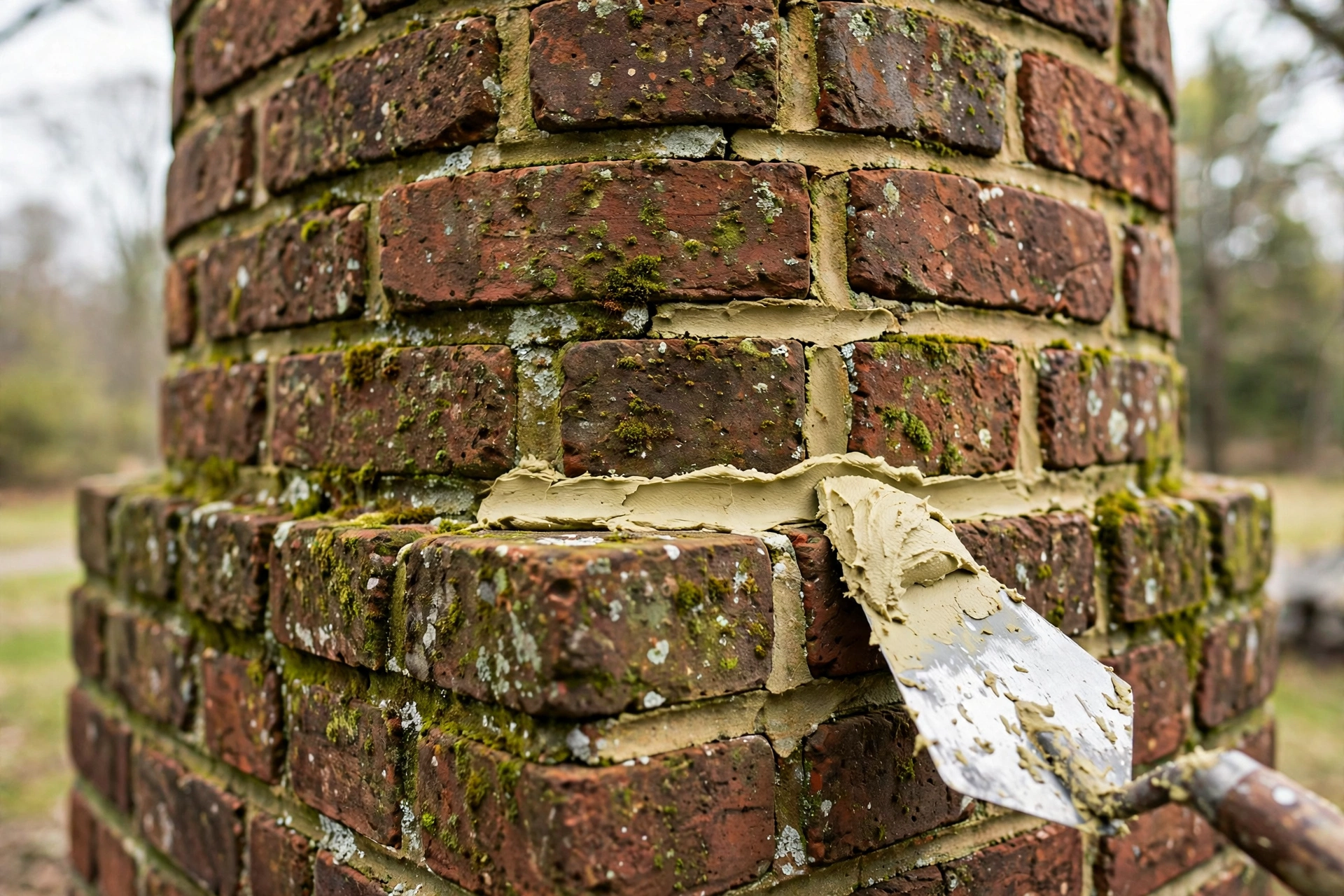
Mason repointing lime mortar joints on a historic brick chimney

Chimney guide • Plymouth, MA

Repointing a Historic Chimney: Why Lime Mortar Matters More Than You Think

Repointing looks like simple maintenance until it’s done with the wrong mortar — on a historic chimney, the wrong mortar doesn’t just fail, it takes the brick down with it.
Call (857) 567-3762 Request a quote

Mortar is supposed to be the sacrificial part of the wall: softer than the brick, so it wears out first and gets replaced. Modern Portland cement is harder than antique brick, which flips the system — the brick becomes the sacrificial part. On a 150-year-old stack, that distinction is everything.

1

Lime mortar gives; cement doesn’t

Lime mortar flexes with the building, breathes moisture out, and can even self-heal hairline cracks. Portland cement is rigid and traps moisture. On soft colonial brick, rigid mortar means every bit of movement and every freeze cycle gets transferred into the brick faces.

2

How to tell what’s in your joints now

Lime mortar is usually lighter in color, slightly crumbly, and you can scratch it with a fingernail or key. Portland is darker gray, very hard, and rings sharp when tapped. If the joints look suspiciously crisp and gray on a 200-year-old chimney, it’s probably Portland — and the brick is paying for it.

3

The thumbnail test for the brick

Press your thumbnail into a brick face. Hard and unmarked means sound brick. Dents or flakes mean spalling has started — often downstream of a hard-mortar repointing. Try several spots, especially the weather side.

4

When repointing is enough — and when it isn’t

Joints receding but brick sound: repoint with lime mortar matched to the original. Brick faces spalling, stack leaning, or damage through the full height: you’re past repointing and into partial or full rebuild territory, with matching antique brick.

5

Matching matters beyond looks

The right lime mix isn’t just about color — it’s about compressive strength and vapor permeability matched to the brick. A mason who talks about mortar analysis and mix ratios for your specific brick is the one you want on a historic stack.

What to do tonight

Scratch a mortar joint with a key. Crumbly and light: likely lime, and the system is working as designed. Hard, dark gray, and sharp-edged: likely Portland on old brick — call (857) 567-3762 and mention it. That one detail reframes the whole job.

Keep reading

Request a quote

This site is protected by reCAPTCHA and the Google Privacy Policy and Terms of Service apply.

Questions? Call (857) 567-3762